Restoring Relationships: From Extractive Landscapes to Living Ecosystems at Selo Bonang and Taman Nara Bestari
Restoring Relationships: From Extractive Landscapes to Living Ecosystems at Selo Bonang and Taman Nara Bestari
By Nara Bestari Foundation, Indonesia
“Many conservation efforts fail not because of a lack of effort, but because they still see nature as an object—rather than a relationship that needs to be restored.”
Across the world, conservation often begins with good intentions: to protect, to preserve, to limit damage. Yet too often, it stops there. Nature is treated as something separate—something to be managed—while the deeper question remains unaddressed:
how do humans learn to live with nature again?
At Selo Bonang and Taman Nara Bestari, we begin from a different premise:
what if the real work of conservation is not protection, but the restoration of relationships?
Landscape as Teacher, Not Object
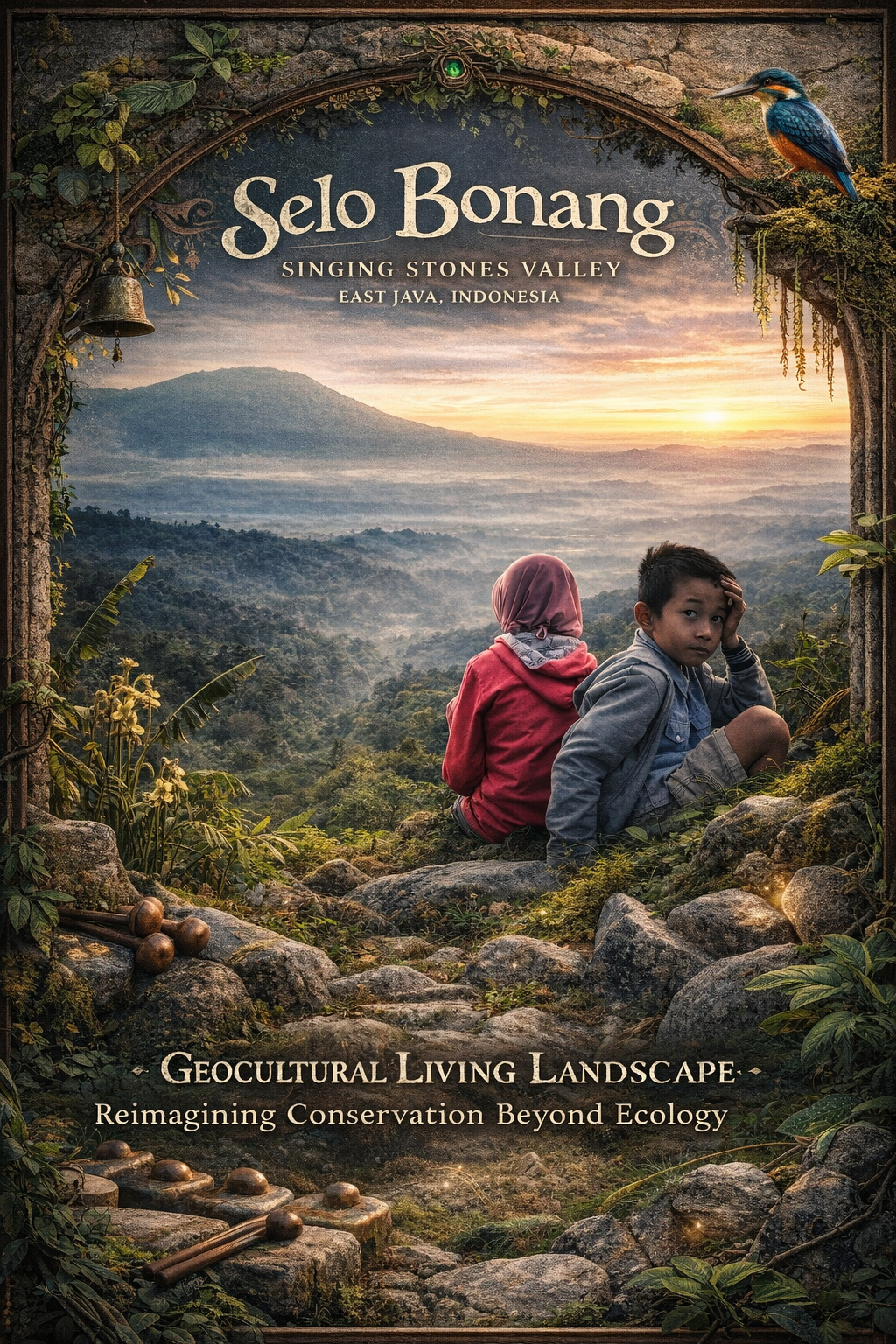
Selo Bonang is not a site to be observed—it is a place to be experienced.
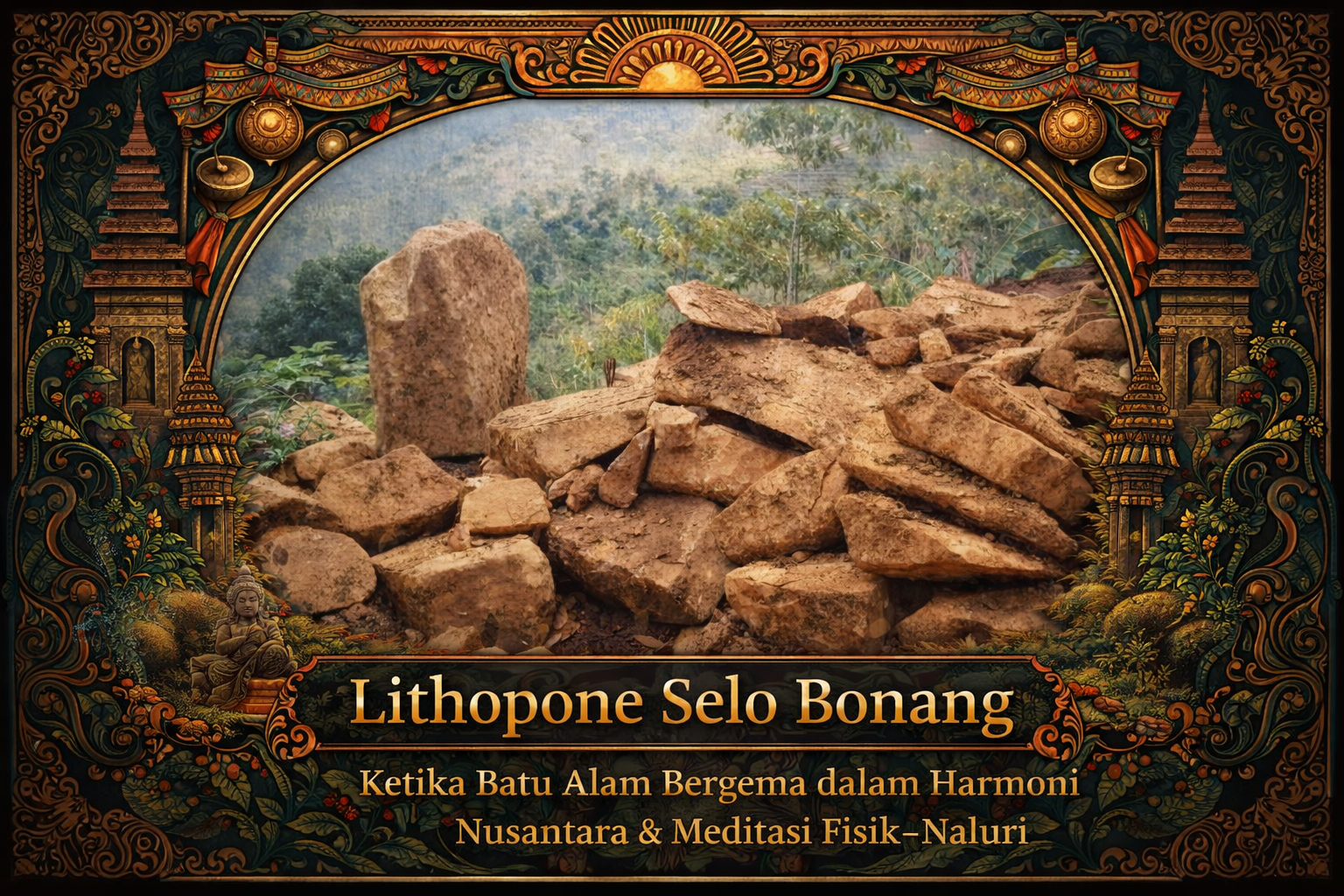
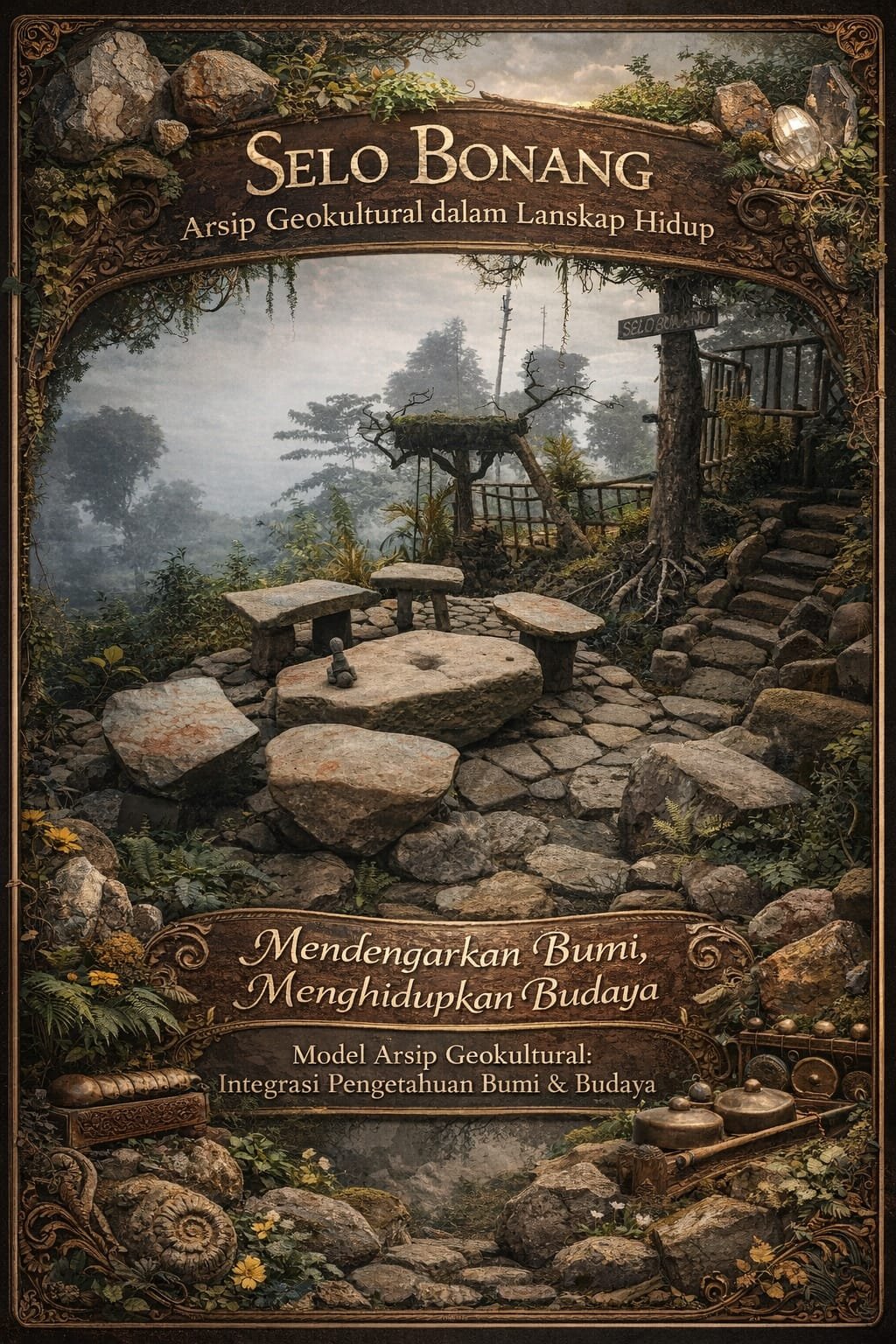
The stones are not treated as static geological objects. When touched, struck, and listened to, they produce resonances that shift perception. Sound becomes a medium through which people reconnect with space, time, and their own presence within the landscape.
Something subtle yet profound happens in this process:
people stop “looking at nature” and begin to experience themselves as part of it.
There is no formal curriculum, no classroom. Learning emerges through direct engagement—through the body, through attention, through listening.
Here, creativity is not an outcome.
It is a method for restoring a broken relationship.
The Yard as an Infrastructure of Change
If Selo Bonang is a point of awareness, then Taman Nara Bestari is where that awareness becomes daily practice.
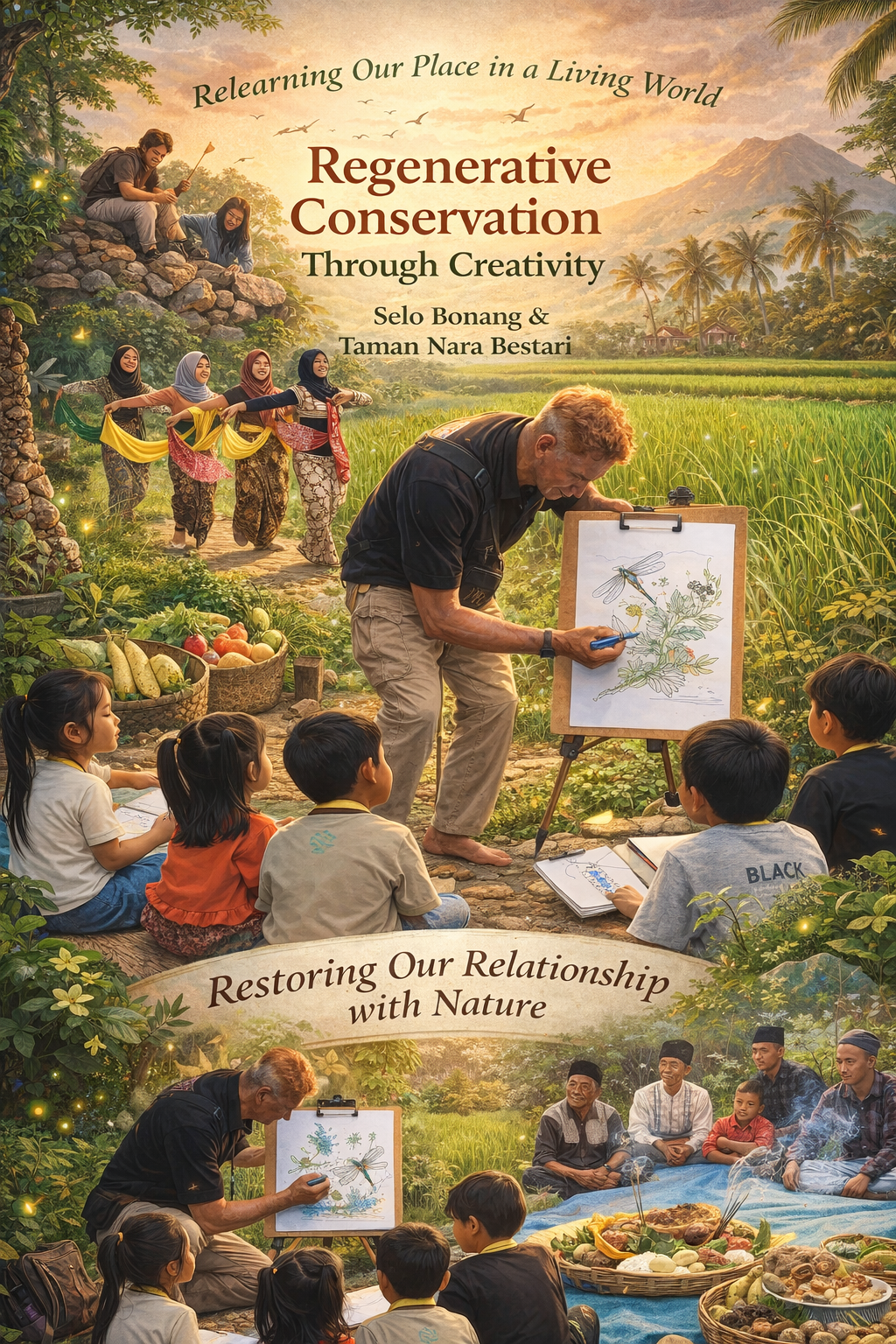
We work with one of the most overlooked spaces: the yard.
Rather than seeing it as residual land, we reposition it as a cultural-ecological unit—a living system where food, knowledge, art, and community intersect.
Within these spaces:
- food is grown locally and regeneratively
- small-scale livestock supports household resilience
- ecological cycles begin to recover
At the same time, the yard becomes a learning environment:
- young people learn from soil, not just theory
- creativity emerges from interaction with living materials
- communities gather, not only socially, but meaningfully
This transformation does not rely on large-scale intervention.
It grows through consistent, contextual practice.
Systemic change begins with the smallest unit of life.
Connecting the Local to the Global
Deeply rooted in its local context, this work is not isolated.
Selo Bonang has become a meeting point for international visitors—artists, researchers, and practitioners—who come not as tourists, but as learners. What they encounter is not an object to consume, but an experience that invites reflection.
In these exchanges:
- local knowledge is not framed as “traditional,” but as relevant and evolving
- small-scale practices open global conversations on ecological crisis
- a specific landscape becomes an entry point into universal questions
This demonstrates that place-based work can carry global resonance.
Learning as Transformation, Not Output
We do not measure success by the number of programs delivered or outputs produced.
Instead, we observe more fundamental shifts:
- how people perceive nature
- how communities relate to their environment
- how young people imagine their future
Learning here is not instructional—it is experiential.
The skills that emerge are not only technical, but deeply human:
- ecological sensitivity
- creative thinking grounded in context
- the ability to question dominant systems
From Experiment to Living Model
What is happening at Nara Bestari is still evolving. It is not a finished project, but a living process.
Yet from this process, a replicable logic begins to emerge:
- conservation as relational practice
- creativity as a driver of social change
- the yard as a unit of transformation
- experience as a method of learning
This is now being developed into the “100 Regenerative Yards” initiative—not as a standardized model, but as a flexible framework adaptable to different contexts
Why This Matters Now
The crisis we face today is not only ecological—it is perceptual.
As long as humans see themselves as separate from nature, every solution will remain partial.
What we're building at Selo Bonang and Taman Nara Bestari is a grounded yet radical response to this condition.
Not through large-scale interventions, but through depth of relationship. Not through abstract theory, but through lived experience.
Becoming Part Again
The question is no longer how we save nature.
The real question is:
how do we become part of it again—consciously, creatively, and responsibly?
This is where transformation begins.
And this is where a more sustainable future finds its foundation.
Tonton Video Dokumenter Kami, Klik Dibawah Ini :
SIMPONI GEOCULTURAL SELO BONANG